35.9°
Exhibition of the Architecture of the Two Holy Mosques
Makkah
A Mirror of Islamic Architecture Throughout the Ages
Makkah
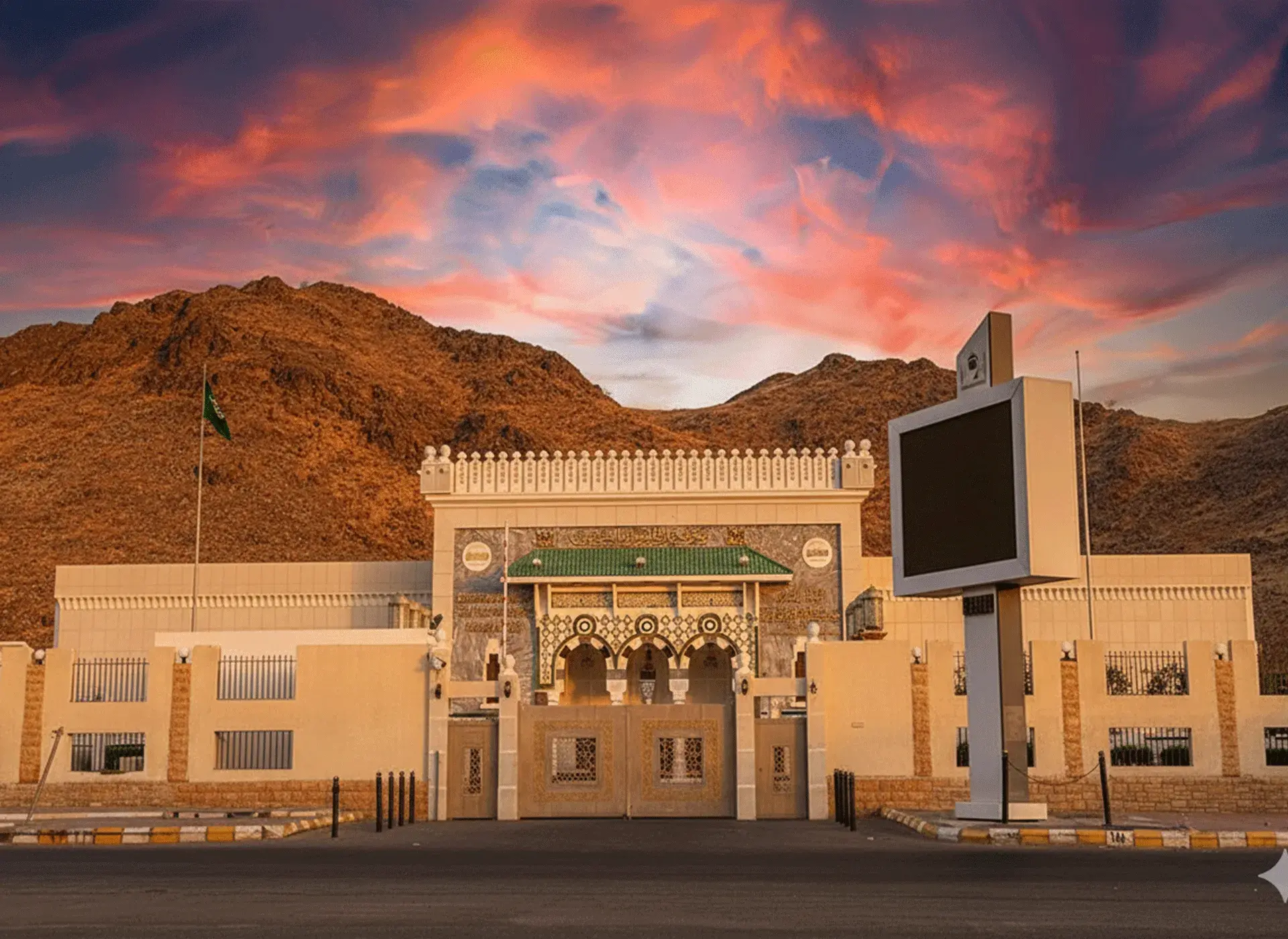
The Exhibition of the Architecture of the Two Holy Mosques is situated on a western side of the Kaaba Kiswa Factory grounds in the Umm al-Jud district of Makkah.
Its construction began in 1419 AH / 1999 AD, and it was opened in the month of Shawwal 1420 AH / 2000 AD. Internally, it takes the form of a grand hall divided into seven sub-halls.
In the first hall, two expansive models of the Two Holy Mosques and their surrounding courtyards are displayed, along with a number of large murals of them.
In a visual scene that takes the visitor on a journey through time and space across their storied history.
The second hall displays many artifacts and façade elements embodying the genius of Islamic architecture in its masterful details.
In addition to plated wooden doors, columns, minaret crescents, doors, column capitals, the Maqam Ibrahim enclosure, and the Kaaba ladder.
In the third hall, models of artifacts related to the Holy Kaaba and its Kiswa (covering) take center stage, with a corner dedicated to manual weaving.
Standouts include the wooden column that was inside the Holy Kaaba, and a frame for the Black Stone made of silver, dating back to the reign of the Ottoman Sultan Murad IV.
Along with a lock for the Holy Kaaba, and the Kaaba door commissioned by King Abdulaziz, may Allah have mercy on him.
In the fourth hall, 13 photographs- gifted by Prince Sultan bin Abdulaziz Al Saud- constitute rare visual documents of the Two Holy Mosques and the Holy Sites.
Taken by Mohammed Sadiq Pasha in the 13th century AH, in addition to a collection of old and modern photographs rendered in exquisite artistic style.
The fifth hall treasures a collection of rare Mushafs (Quran copies) and manuscripts from the Library of the Holy Mosque in Makkah and the Library of the Prophet’s Mosque.
The sixth hall is dedicated to artifacts and models related to the Prophet’s Mosque, such as doors, windows, and the model of the sliding dome innovated during the expansion of King Fahd bin Abdulaziz, may Allah have mercy on him.
It also features one of the clocks from the Prophet's Mosque, gifted by Sultan Abdul Majid Khan, and one of the massive Saudi doors from the first Saudi architecture of the Prophet’s Mosque.
The seventh hall centers on a central model of the Zamzam Well, with the covered frame that used to surround its mouth, and a collection of marble tiles and facades inscribed with Quranic verses, Hadiths, and foundational texts.
And a clock procured under King Abdulaziz, may Allah have mercy on him.
This exhibition stands as a vibrant portal into the history of the Two Holy Mosques, connecting their ancient legacy with the present, enriched by devoted stewardship of Earth's holiest sites.