35.5°
Al-Masmak Palace Museum
Riyadh
A Historical Symbol Narrating the Story of the Kingdom's Unification
Riyadh
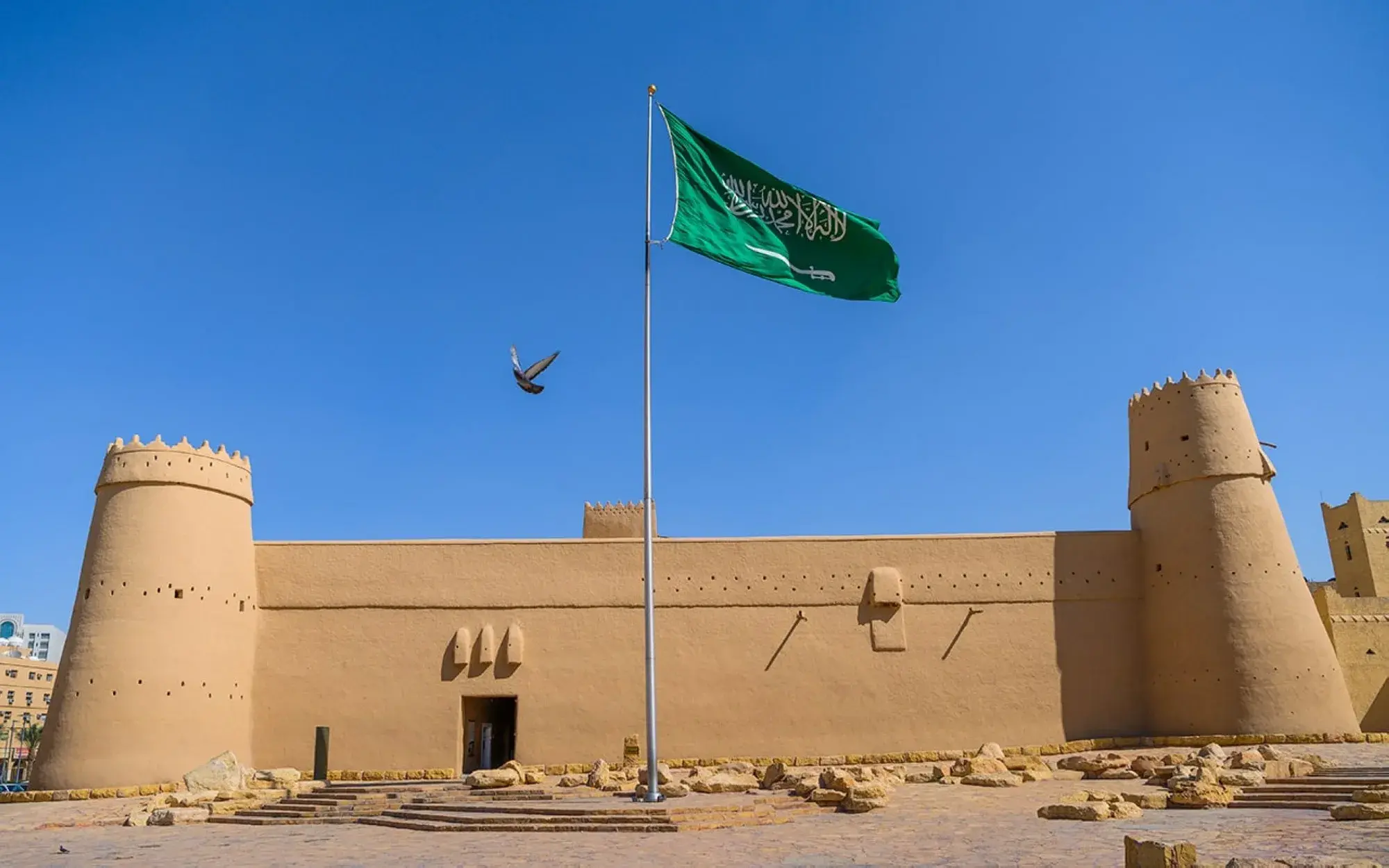
Al-Masmak Palace stands as one of the most important historical landmarks in the Kingdom of Saudi Arabia, as it symbolizes the momentous regaining of Riyadh city and the unification of the Kingdom. It is located in the old quarter, in central Riyadh. It is a robust, square fort, built according to an architectural plan that is considered an integrated model of military and civil architecture. One of its most prominent defensive features is its outer wall, whose thickness reaches approximately two meters at the gate. Hence came its name as Al-Masmak, which signifies the strong building, the thick, heavily fortified structure with high, imposing walls.
Throughout its history, Al-Masmak served as a residence, a center for governance, and a treasury (Bayt al-Mal). It was later used as a warehouse for ammunition and weapons, a function it continued to perform until the decision was made to preserve it as a heritage landmark. The palace was then turned into a museum and officially inaugurated in 1416 AH / 1995 CE.
Al-Masmak Palace consists of two levels: a ground floor and an upper floor. The ground floor comprises the following sections:
- The Palace Gate: Located on the western side of the palace, it is made of palm trunks and tamarisk wood. It features three beams, and in its center is a small opening called "Al-Khawkhah," used as a small passage allowing one person to pass through.
- The Mosque: Located to the left of the palace entrance, it comprises a large room with several columns, shelves for Qur'ans built into its walls, and a plastered Mihrab (prayer niche).
- The Majlis (Diwaniya): Located directly opposite the main entrance, it is a rectangular room featuring a traditional "Wajjar" (hearth) for lighting fire.
- The Well: Located in the northeastern side of the palace, it was dug to a reliable source of water in the palace, especially during siege periods.
- The Towers: An approximately 18-meter-high cylindrical tower stands at each of the four corners of Al-Masmak Palace, containing apertures for shooting. In the center of the palace raises a square tower overlooking the courtyard, known as “Al-Murabba'ah” (the square).
The palace includes a central courtyard surrounded by pillared rooms, some of which are internally connected. In addition, there are three residential units: one allocated for the ruler's residence, a second for the treasury (Bayt al-Mal), and the last one for guest accommodation.
The upper floor consists of rooms overlooking the courtyard, along with some chambers designated for living quarters.
Following its conversion into a museum, it came to house several exhibition halls. These halls feature pictures and maps that narrate the epic of the recapture of Riyadh and the story of the Kingdom's unification by the late King Abdulaziz. The display includes pieces of the weapons used at that time, such as rifles and swords, alongside photos and exhibits on the Kingdom's modern development. Complementing these are some heritage exhibits, documentary films, and wall posters.