35.8°
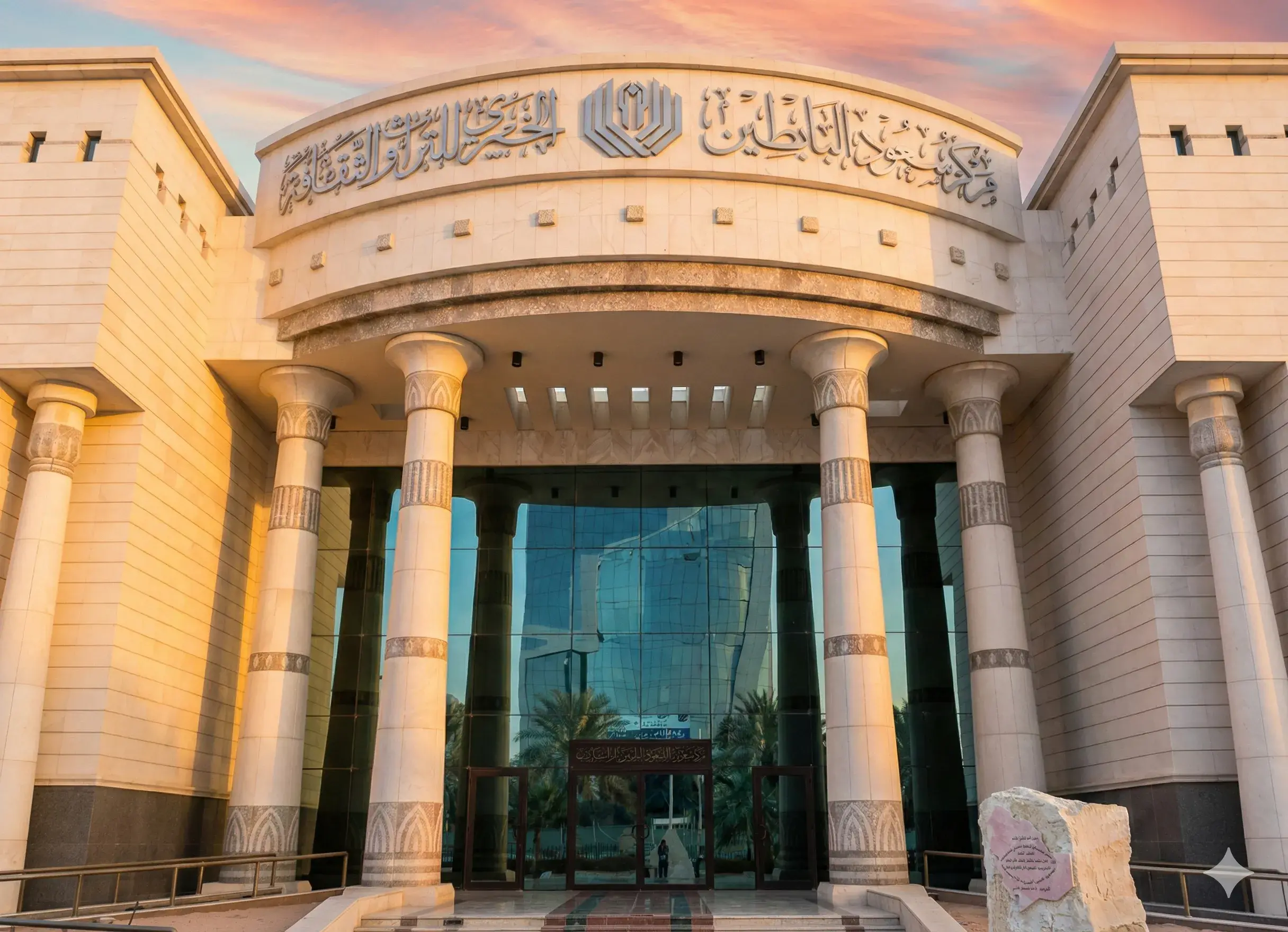
Saud Al-Babtain Charitable Center for Heritage and Culture Museum
Riyadh
A Unique Window into the Treasures of History and Knowledge
Riyadh
Nestled in the Al-Sahafa district of Riyadh, Saud Al-Babtain Charitable Center Museum stands as a cultural and heritage landmark for charitable work, reflecting a great interest in preserving heritage and serving knowledge.
Established by Abdullatif bin Saud Al-Babtain at his own expense, he supplied it with tens of thousands of manuscripts, books, coins, and rare periodicals.
In 1422 AH / 2002 CE, His Royal Highness Prince Salman bin Abdulaziz, then Governor of the Riyadh Region, pulled back the curtain from the center's commemorative plaque at inauguration.
The center provides cultural and educational services to students, researchers, and visitors in an environment rich in resources and stimulating for research; it contains numerous libraries, study and reading halls, and a research center.
It also includes technical workshops for manuscript restoration, a VIP reception hall, and a simultaneous interpretation hall, within an integrated system reflecting the center's dedication to developing cultural awareness and facilitating access to knowledge.
Among its premier holdings are a collection of Mamluk, Fatimid, and Ayyubid Qurans, as well as rare manuscripts and works written by the authors themselves, and manuscripts penned by elite calligraphers in exquisite Arabic scripts.
The center also contains manuscripts in medicine, engineering, astronomy, mathematics, chemistry, and physics. This rich diversity reveals the center's status as a scientific reference documenting the history of Arabic calligraphy and the scholarly output of eminent Muslim figures.
A numismatic collection features ancient coins, some dating back to the Greek and Roman eras, while others date back to the Mesopotamian civilization.
In addition to another collection of gold and silver Islamic coins, including Umayyad, Abbasid, Andalusian, Ottoman, and Ayyubid dinars and dirhams, the center thus opens a historical window into the historical evolution of currency.
Saudi historical coins further enrich holdings, including those of the Sharifs in Makkah, a quarter pound dating back to the era of King Abdulaziz Al Saud— may Allah rest his soul in peace—and various other coins.