The Trench (Al-Khandaq)
Madinah
The Defensive Barrier that Changed the Course of the Battle
Madinah
In the fifth year of the Hijra (migration), facing the threat of the Confederates' advance, the Companion Salman al-Farsi, may God be pleased with him, suggested digging a defensive trench along the exposed northern side of Al-Madinah. The Prophet, peace be upon him, welcomed the idea and ordered its implementation.
The length of the trench is estimated to be about 12 kilometers, extending from Harrat Al-Wabarah in the west, passing by the foothills of Mount Sal', curving in an arc shape until it reaches Mount Dhubab and Ajamat Al-Shaikhan, and finally ending at Harrat Waqim Lava Field in the east.
The trench was not just an earthen barrier; it transformed into a symbol of determination, organization, and intelligent defense during the most difficult circumstances of the siege.
Despite the disappearance of most of its features over the centuries, its memory has remained alive in the books of Seerah and history, and it was mentioned that some parts of it were used militarily in later periods, including the era of Yazid ibn Mu'awiya and then Abu Ja'far al-Mansur.
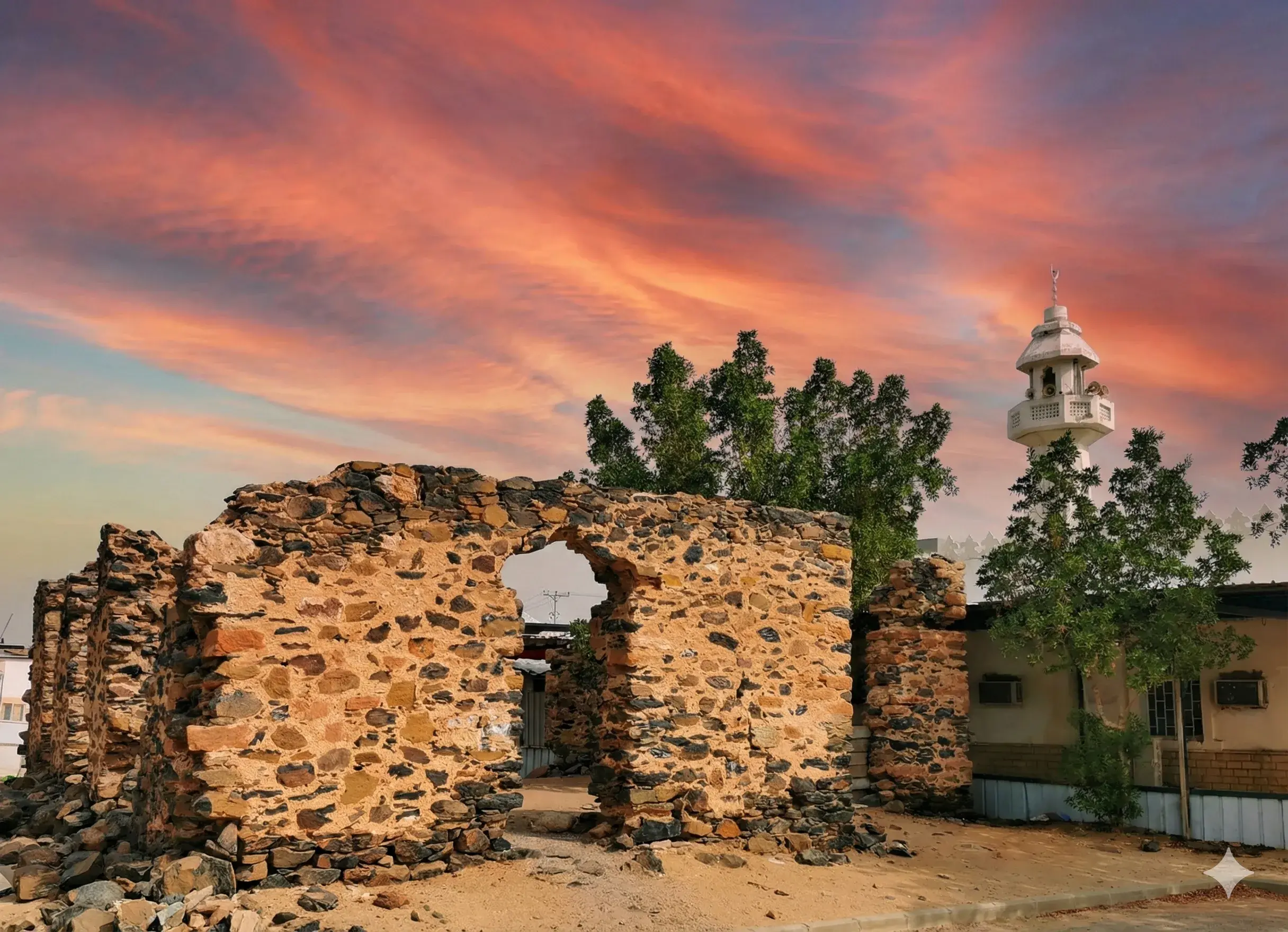
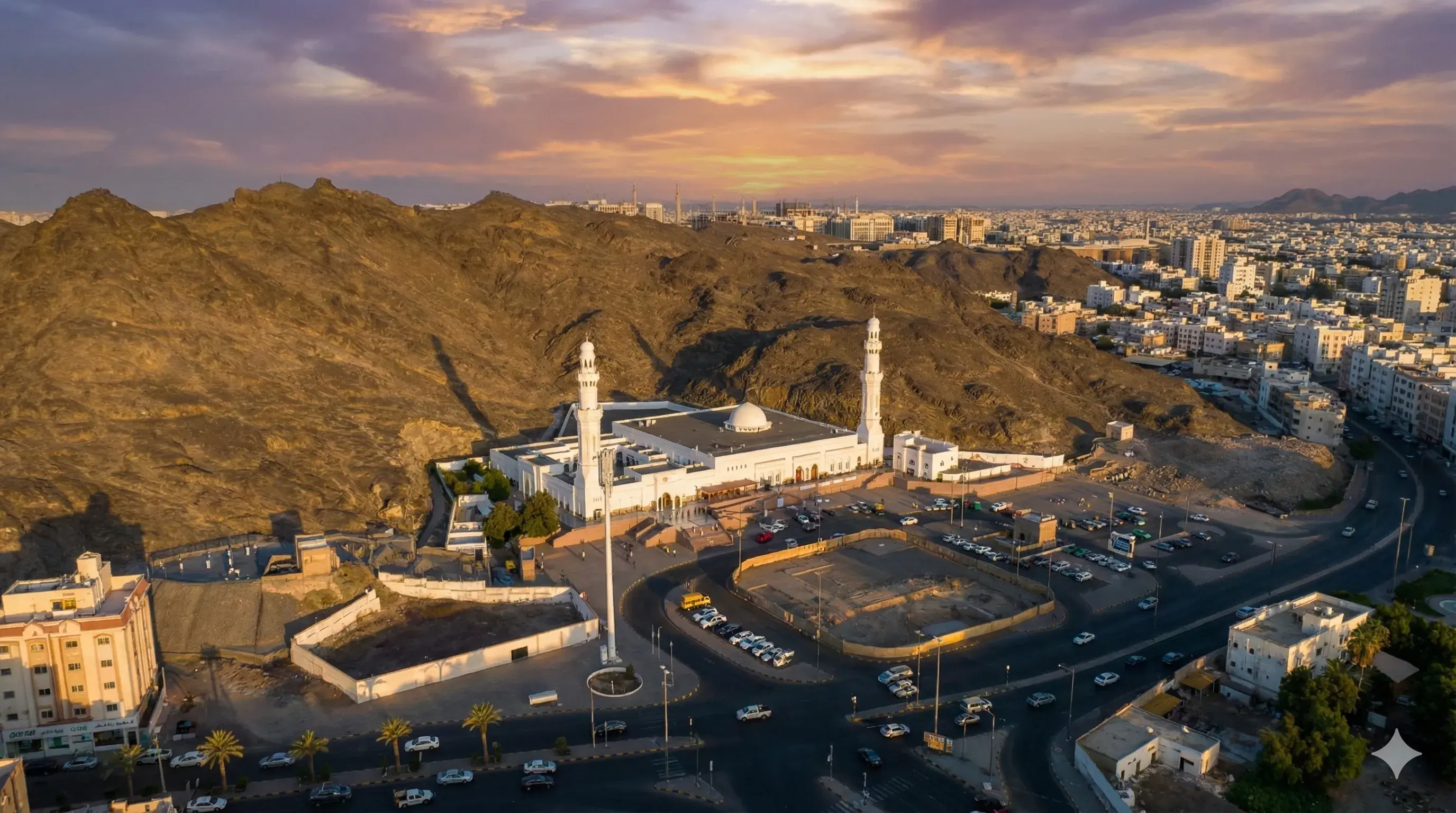
At the site of the trench, the "Seven Mosques" were later built, including Masjid Al-Fath (The Mosque of the Victory), over the locations where the Prophet, peace be upon him, and his Companions were stationed during the battle, making the site a witness to the epic defense of Al-Madinah.