26°
Al-Hijr
Madinah
A Marvel of Rock-Cut Architecture in the Heart of the Peninsula
Madinah
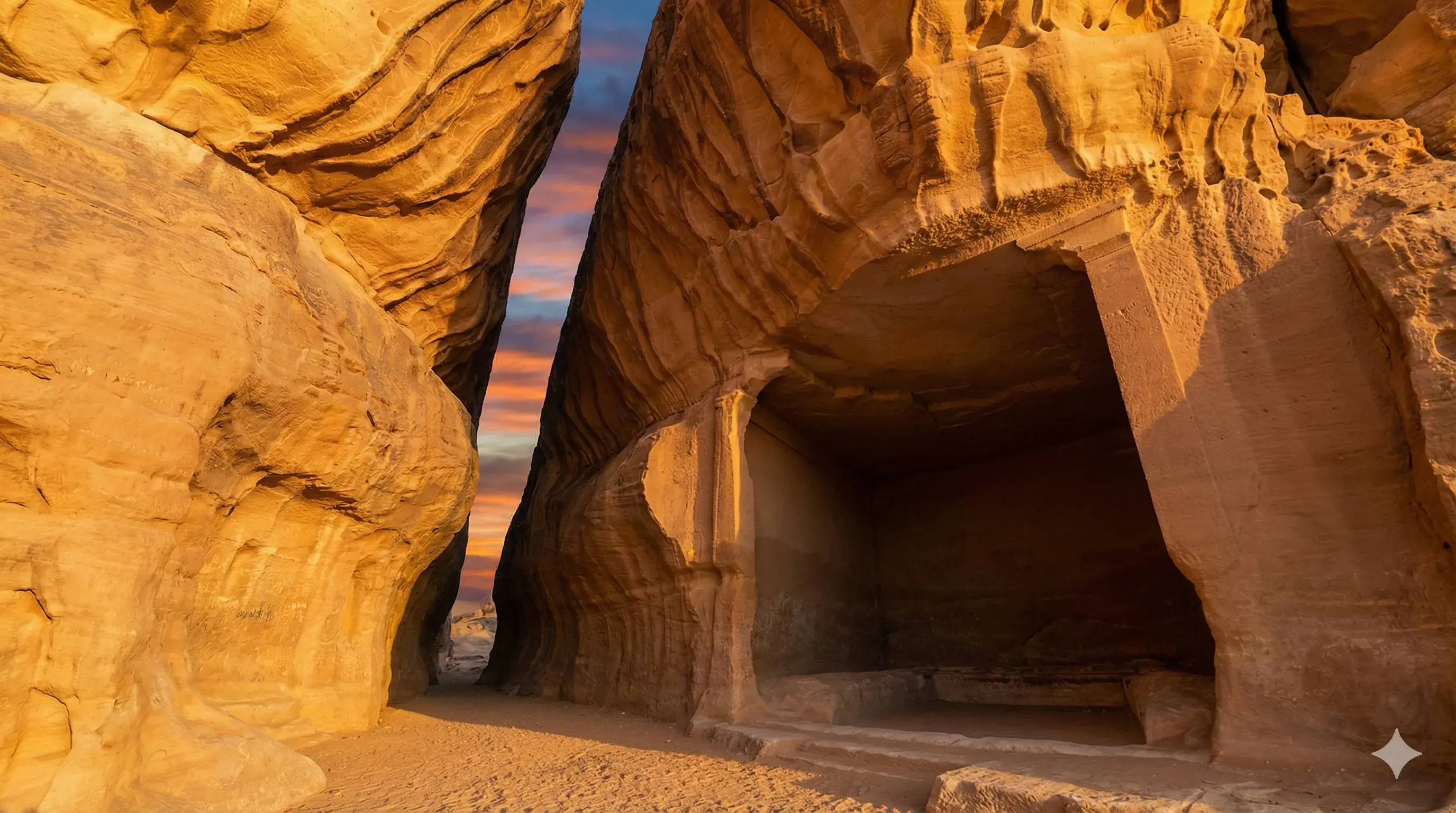
Al-Hijr is located about 23 km north of AlUla, in a spacious area surrounded by sandstone mountains. It is known in the Holy Quran as the site of the people of Thamud, in the verse, the meaning of which is: (And the dwellers of Al-Hijr certainly denied the messengers).
Al-Hijr was one of the important Nabataean settlements (cities) during the first century BC and the first century AD, and its civilizational influence extended until the fourth century AD.
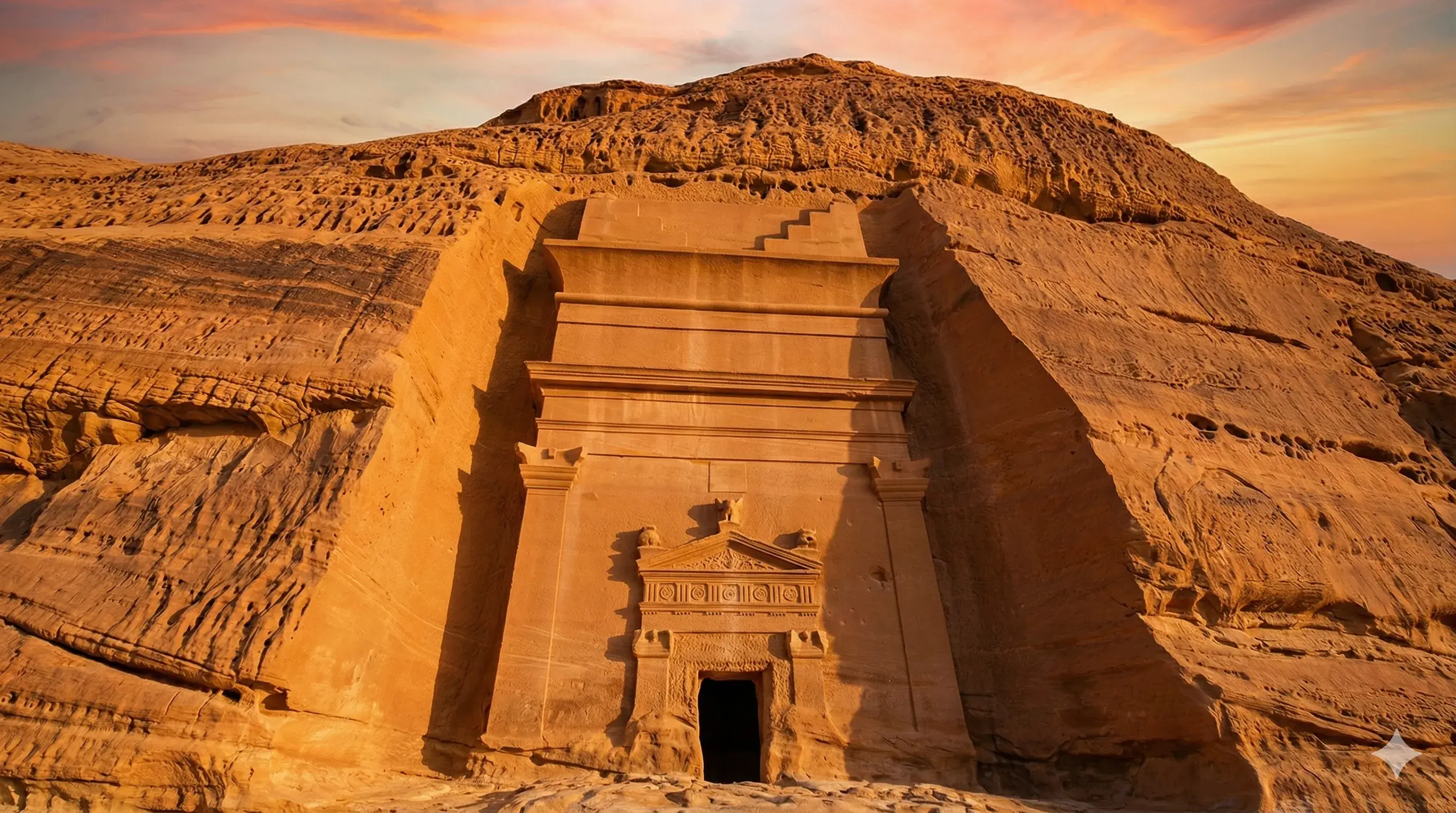
Al-Hijr includes more than 131 rock-cut tombs, 33 of which are specifically dated between 1 BC and 76 AD. The tomb facades are distinguished by geometric decorations, and mythical, animal, and vegetal inscriptions, revealing an astonishing development in architectural engineering and meticulous carving. The tombs of Qasr Al-Fareed, Qasr Al-Bint, Al-Khuraibat, and Al-Sulaymiyyah are among the most prominent examples.
Water caves, cisterns for storing rainwater, channels, carved caves, niches, and caves with religious or social functions such as the Diwan of Abi Zayd, are scattered throughout the site. The inscriptions, in Nabataean, Thamudic, Dadanitic, Lihyanic, and Greek scripts, demonstrate the diversity of the historical periods the site passed through.
To the south of Al-Hijr lies the walled Islamic city of "Al-Mabiyat," the Zummurud Castle in Al-Khashiba village, and the ancient Roman port of Al-Jar on the Red Sea coast, reflecting the extended commercial importance of the region.