30.9°
Al-Najdi Mosque
Jazan
A Historical Masterpiece Reflecting the Heritage Identity of Farasan
Jazan
Al-Najdi Mosque is attributed to a man from Najd named Ibrahim Al-Najdi, who came to reside in Farasan in 1347 AH. He worked in the pearl trade and rose to prominence. He emerged as one of its notable figures, leaving a legacy by establishing this mosque. |
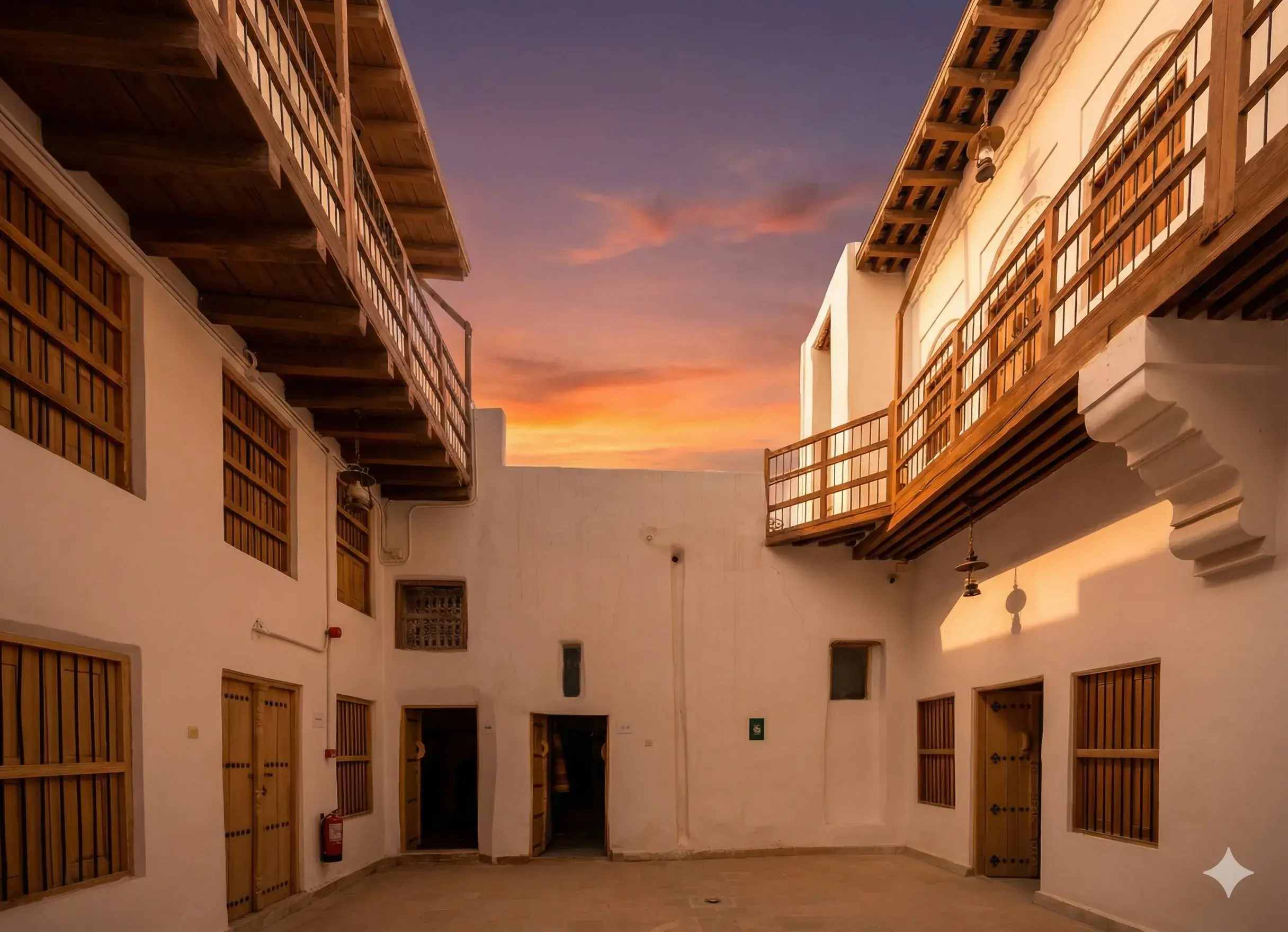
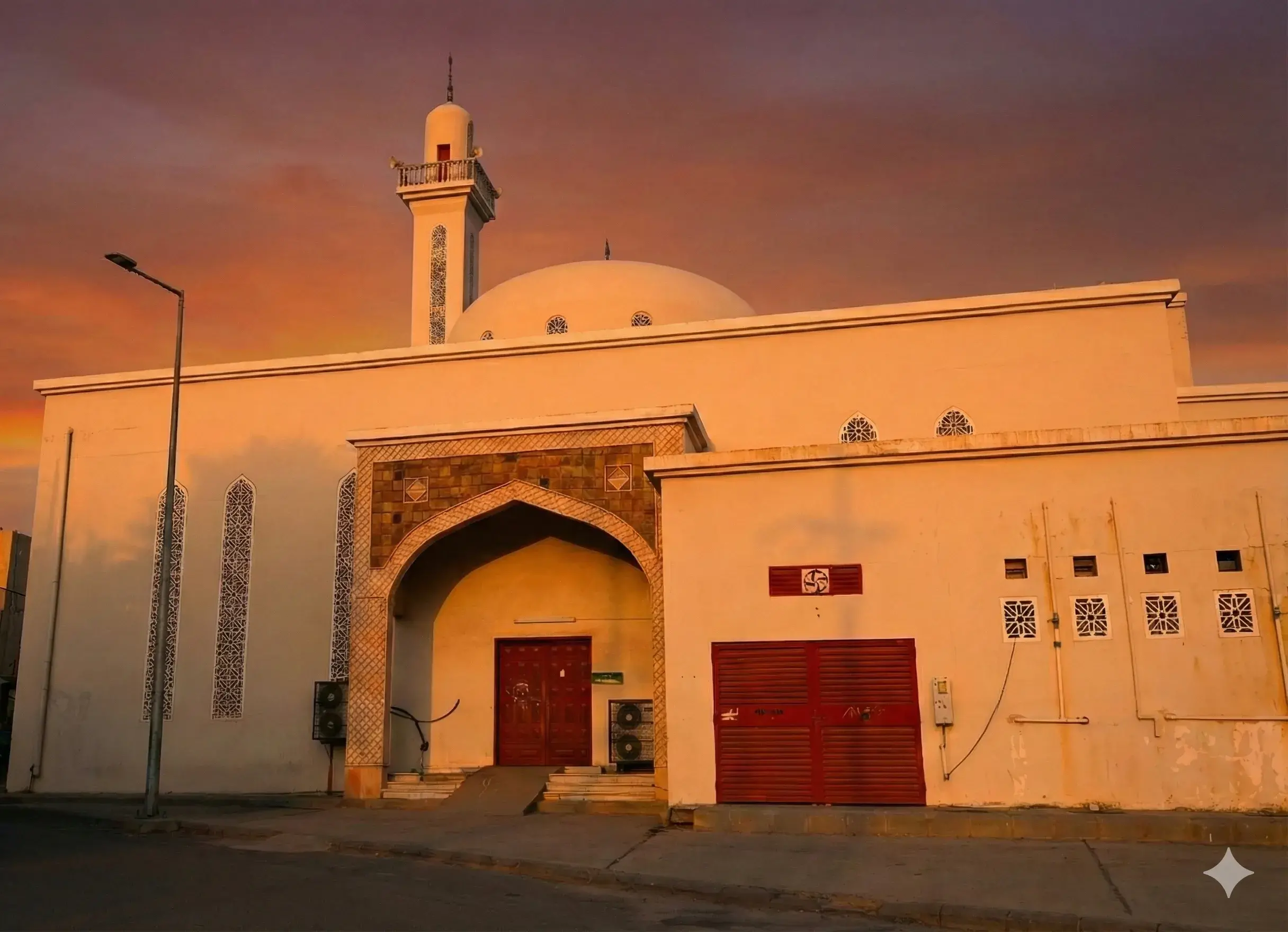
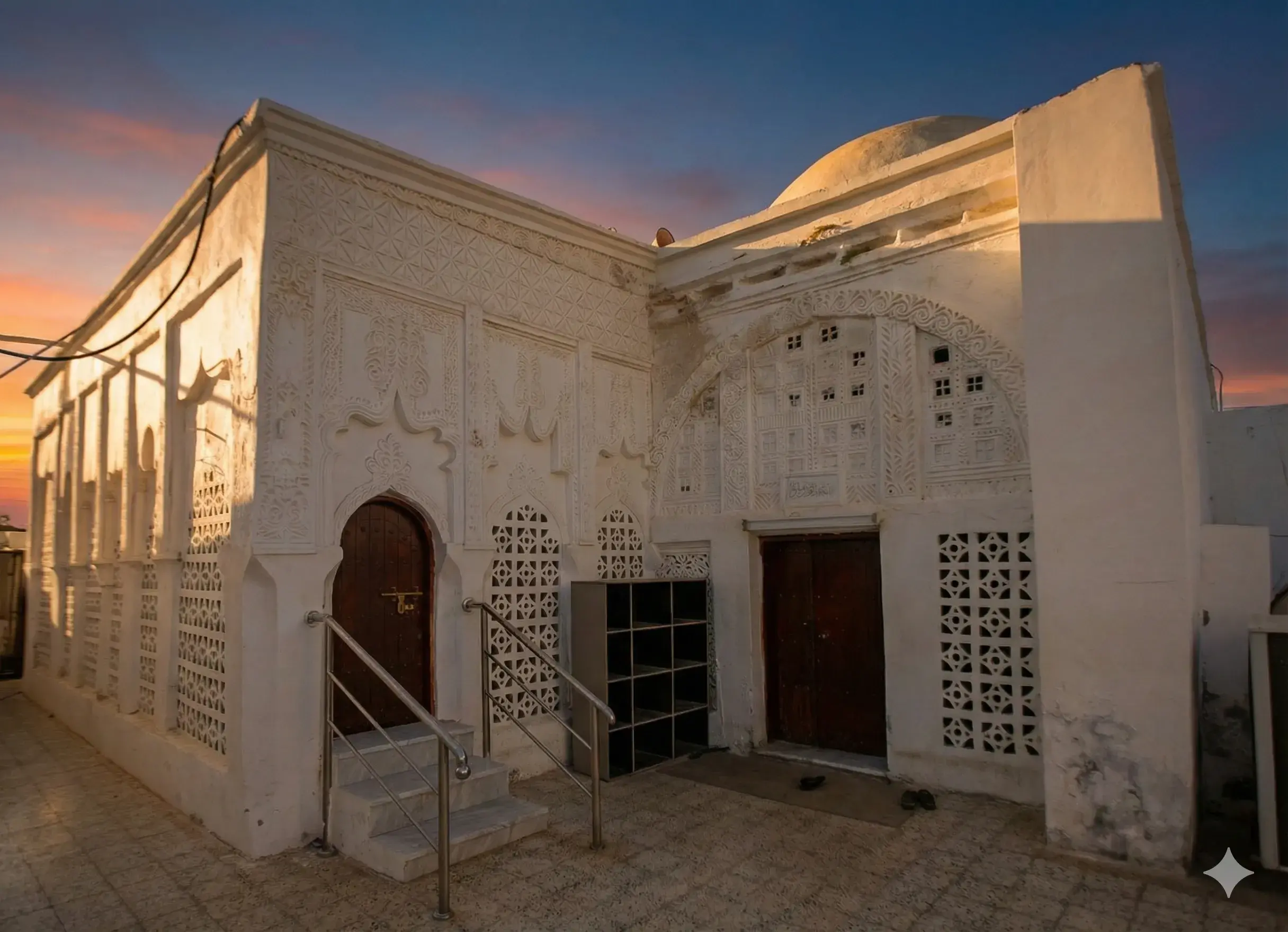
Al-Najdi Mosque is located in the heart of Farasan City, surrounded by houses from all sides, which grants it a distinct presence within the city's urban fabric. It is rectangular in shape and consists of a prayer hall, an open courtyard, the foundation of an octagonal minaret, and two entrances leading to the mosque's open courtyard, which is about two meters high. |
Twelve well-preserved domes crown the prayer hall. The arches springing from the columns are all finely executed and tightly constructed, with pointed spans that support domes that may be described as lowered. The mosque has four windows in the qibla wall, each surmounted by an arch adorned with geometric recessed plaster ornamentation, underscoring the precision of its Islamic architectural detailing. |
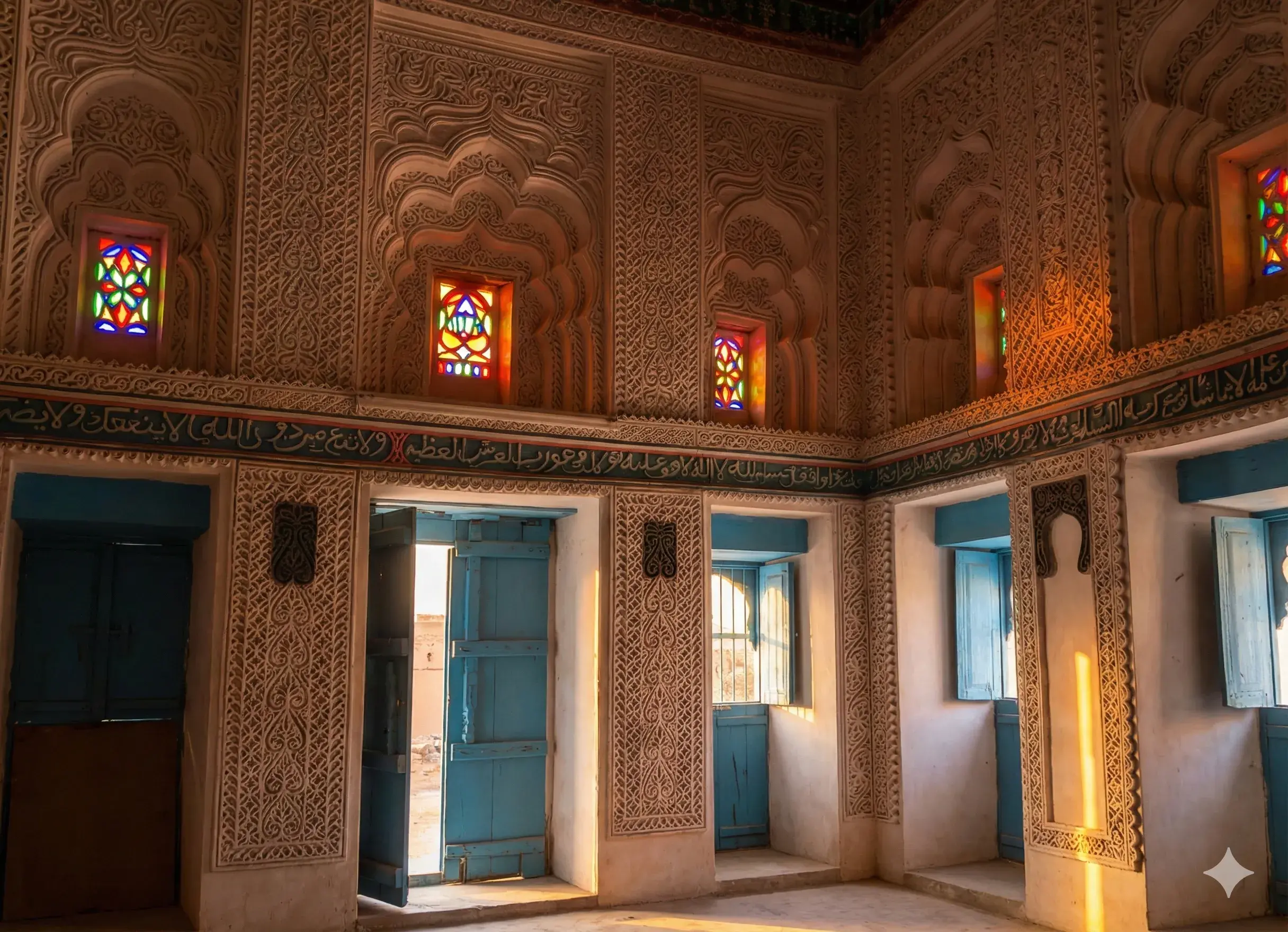
Decorative elements—or their surviving traces—can be observed in the domes, on some columns, along the southern wall overlooking the courtyard, and on the mihrab and the minbar, the latter of which remains a remarkable artistic masterpiece in its design, construction, assembly, and rich ornamentation. This reflects high taste and great interest in the aesthetics of architecture. |
Behind the prayer hall, there is a prayer area slightly elevated above the mosque's floor level, with a Mihrab in its centre. It appears that prayer is held there when the number of worshippers is small, or it is used as a prayer area for women during Ramadan. This underscores the suitability of the mosque’s design for worshippers across diverse circumstances and seasons. |