20.4°
Umar ibn al-Khattab Mosque in Dumat al-Jandal
Al-Jawf
A Witness to the Beginnings of Islamic Architecture in the Arabian Peninsula
Al-Jawf
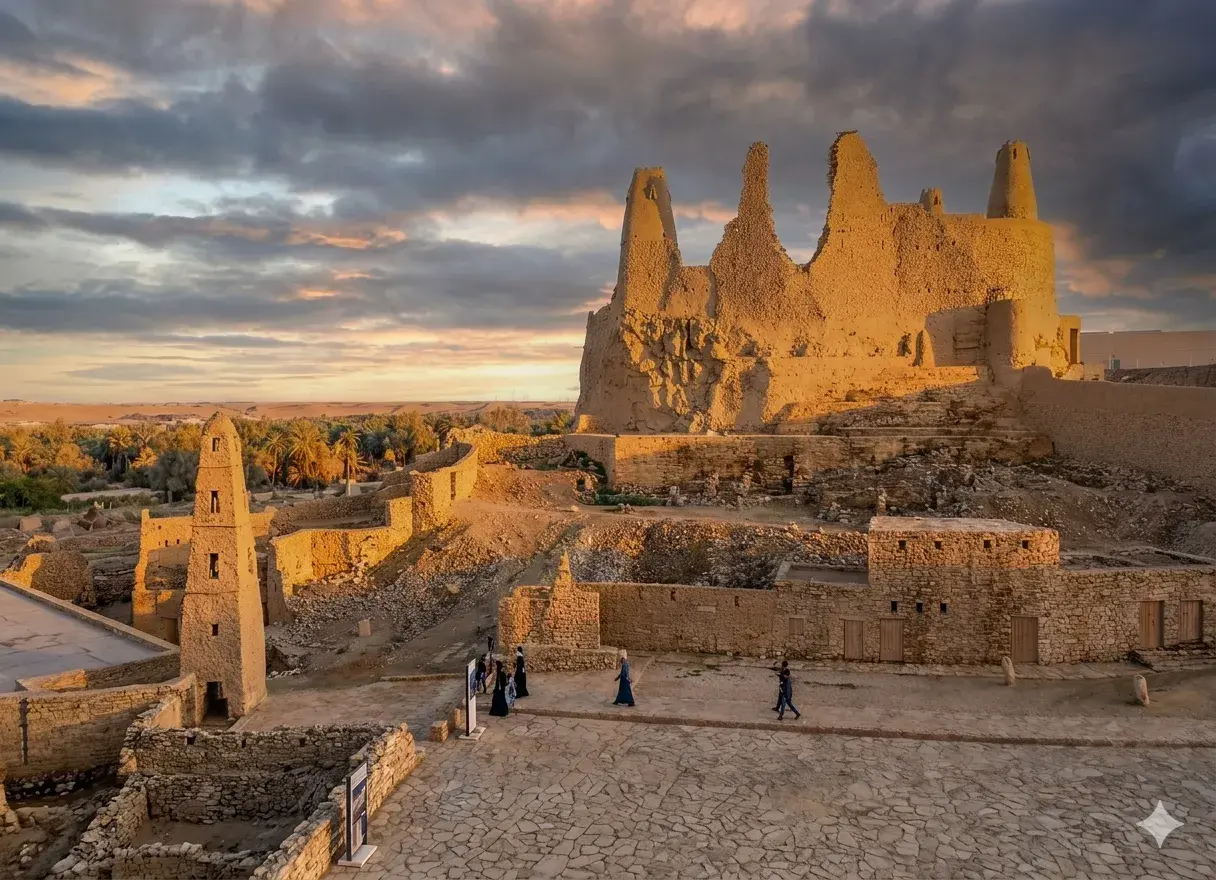
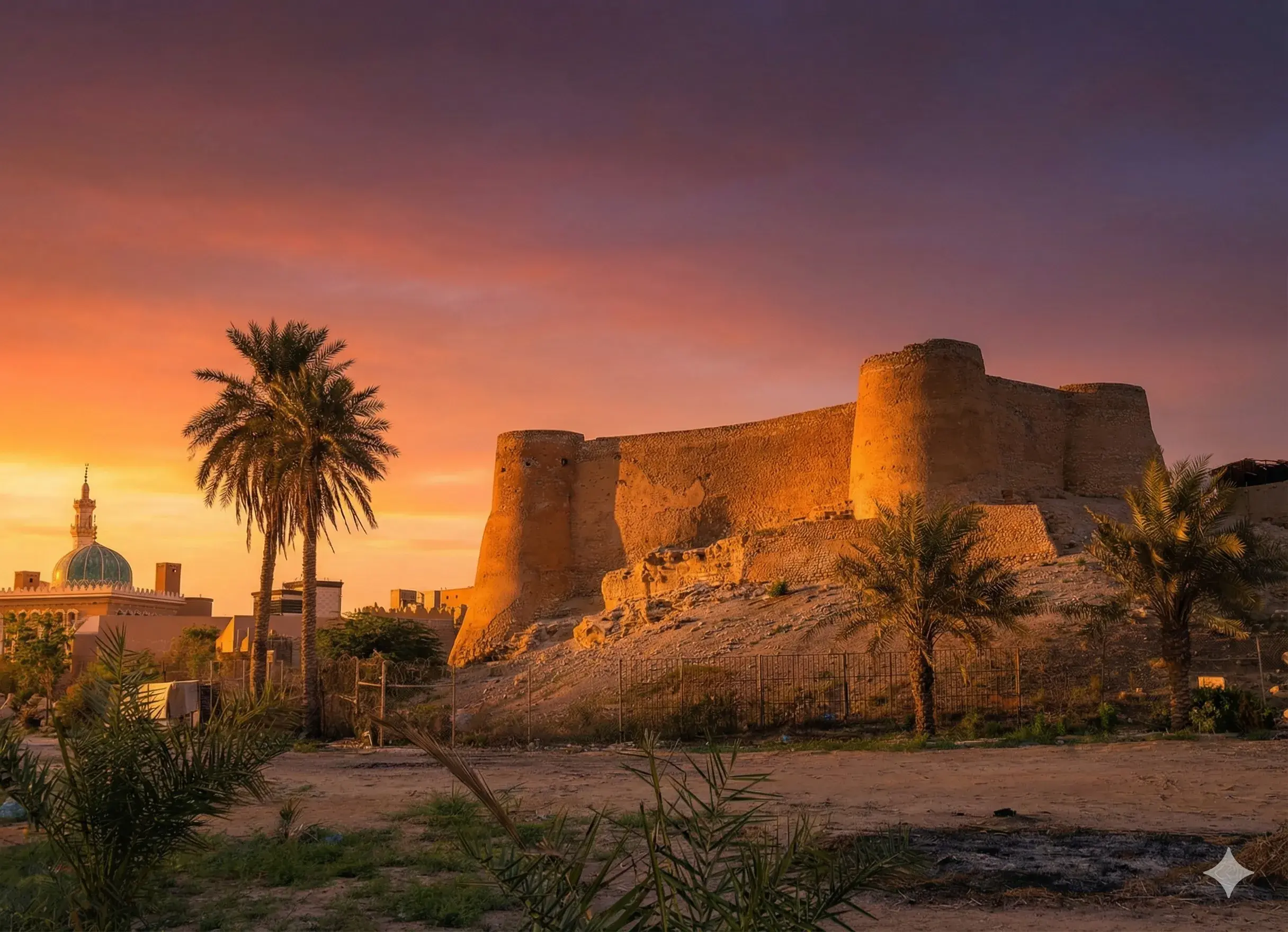
Umar ibn al-Khattab Mosque (may Allah be pleased with him) is located in Dumat al-Jandal Governorate in the Al-Jawf Region, in the centre of the old town directly north of the archaeological Marid Castle, its importance lies in preserving the traditional layout of early mosques, modelled on the Mosque of the Messenger of Allah (PBUH) in Madinah and the first mosques in Islam. |
Although sources have not confirmed the attribution of this mosque to Umar ibn al-Khattab (may Allah be pleased with him), the joining of Al-Jawf to the Islamic state after Khalid ibn al-Walid's conquest of Dumat al-Jandal at the beginning of Abu Bakr al-Siddiq’s caliphate suggests a strong possibility that a mosque was built there after that date; perhaps it was at the beginning of Umar ibn al-Khattab’s caliphate. |
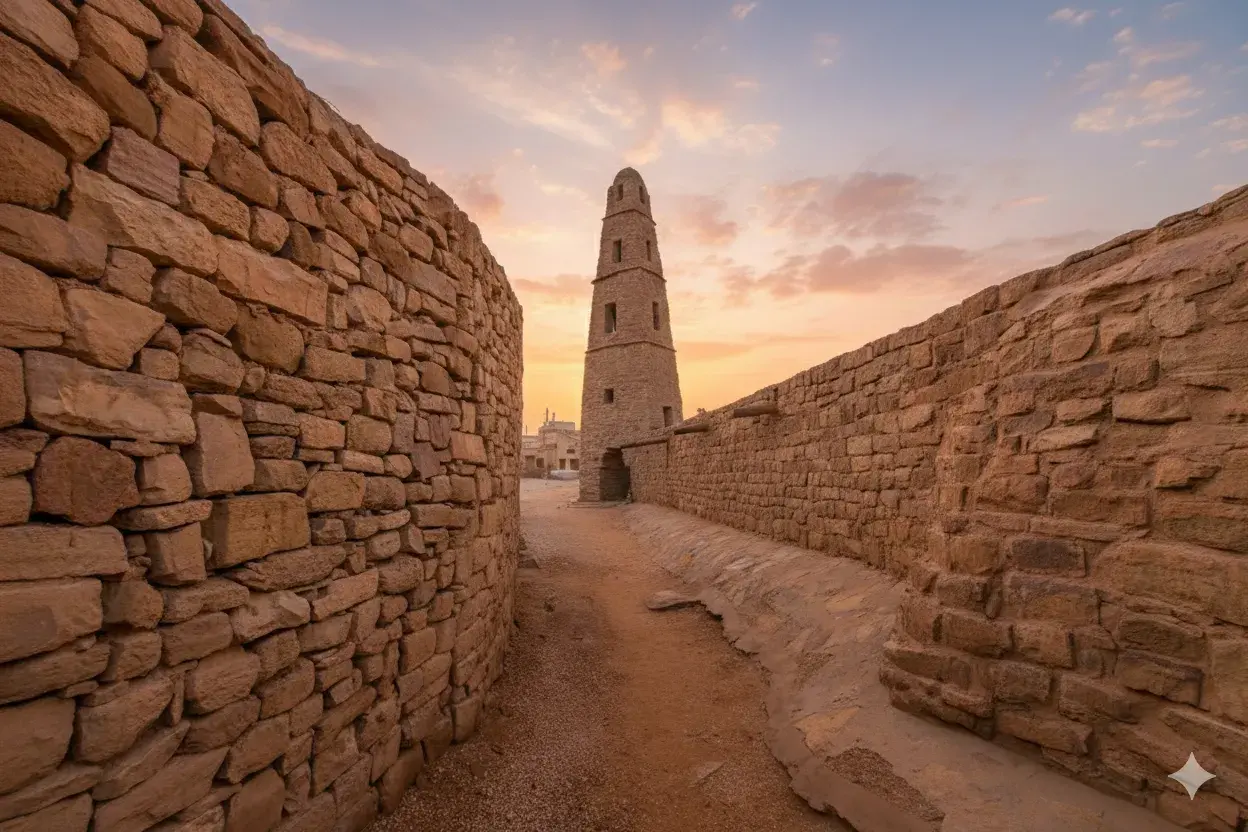
Built with local materials, the mosque has stone-built walls and roofs fashioned from tamarisk wood and palm fronds. It is distinguished by an architectural style that is unique among the Kingdom of Saudi Arabia’s active mosques: it covers an area of 660 m² and is rectangular in plan. Its overall layout comprises four principal elements: the Qiblah portico (the covered section parallel to the Qiblah wall), the mosque courtyard, a small northern prayer hall at the rear of the courtyard (likely a later addition or renovation), and a minaret positioned at the south-western corner. |
As for the main door of the congregational mosque, it is located in the southwestern corner, next to the minaret. It leads to a corridor for distributing those entering the Qibla portico or shade, which is considered the most important section of the mosque. |
At the centre of the Qiblah wall are a stone mihrab and minbar, interspersed with a number of recessed openings intended for storing copies of the Qur’an and other religious books. |
The mosque courtyard in the northern part constitutes approximately one-third of the mosque's area. The attached prayer hall is located on the northwestern side of the courtyard, with a total area of 57 m². |
The mosque’s minaret is regarded as a distinguished element in the history of Islamic architecture. Unique in form, it was built from stone quarried in Dumat al-Jandal, and its summit terminates in a semi-pyramidal profile, reaching a height of 13 m. In addition to signalling the times of prayer, it was used for surveillance and reconnaissance, helping to safeguard the city and its residents from external attack. |
The mosque is devoid of any decorative elements, as it is characterized by simplicity. Furthermore, all its architectural elements are structural and functional, bringing us back to the design of early Islamic mosques. |