28°
Al-Hima Castle
Jazan
An Archaeological Defensive Landmark in Damad
Jazan
Al-Hima Castle, lies in Damad Governorate, approximately 20 km east of Damad City, is a prominent witness reflecting the features of ancient defensive architecture in the Jazan Region. The designation was derived from its main function: protecting the property and vast farms of its founder in that area. |
The castle was built in 1252 AH / 1836 AD by Sharif Mohammed bin al-Hassan bin Ali bin Haydar al-Khayrati, with the intention of supervising his farms on the valley bank. He had housed some of his Mamluks (slaves) within it, while the farm laborers were housed outside the castle; they settled and stayed in the area, which later became known as "Al-Hima," after the name of the aforementioned castle. |
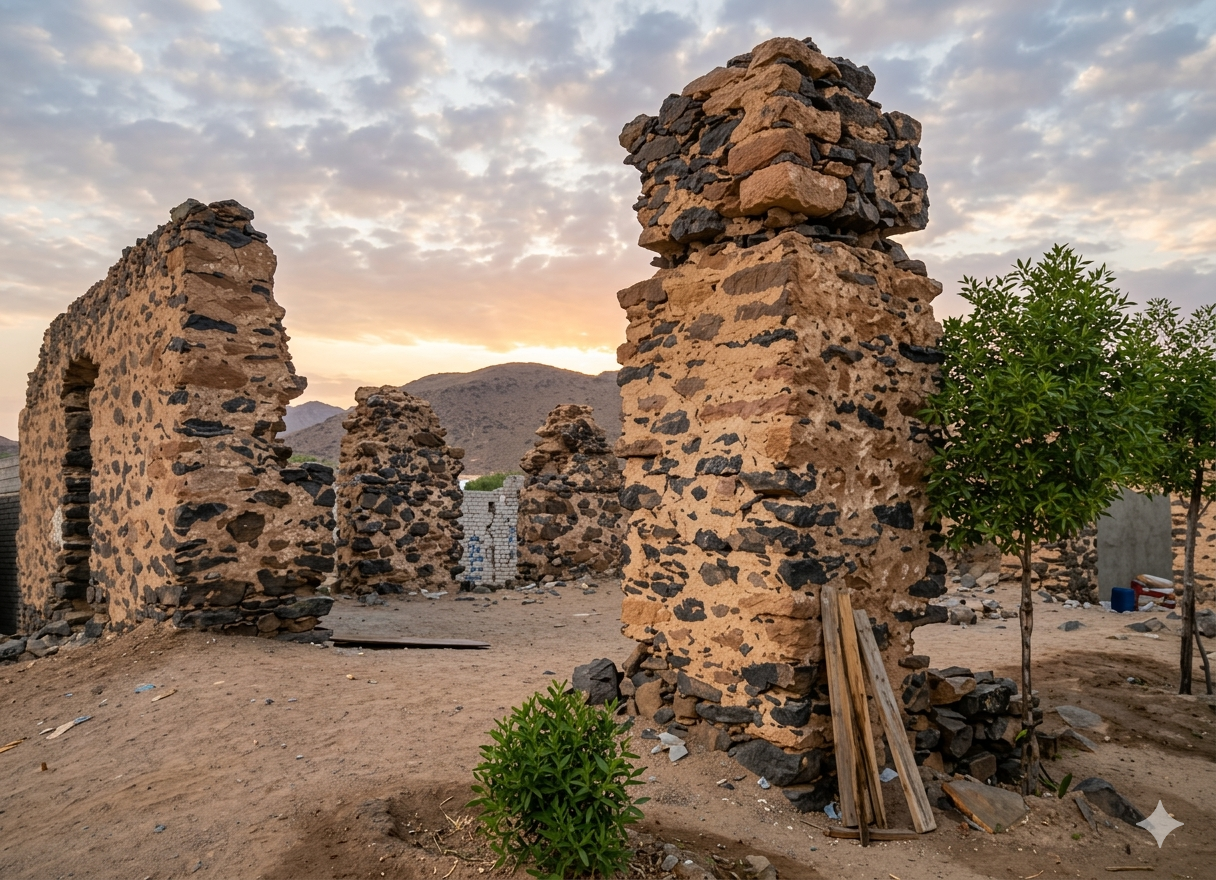
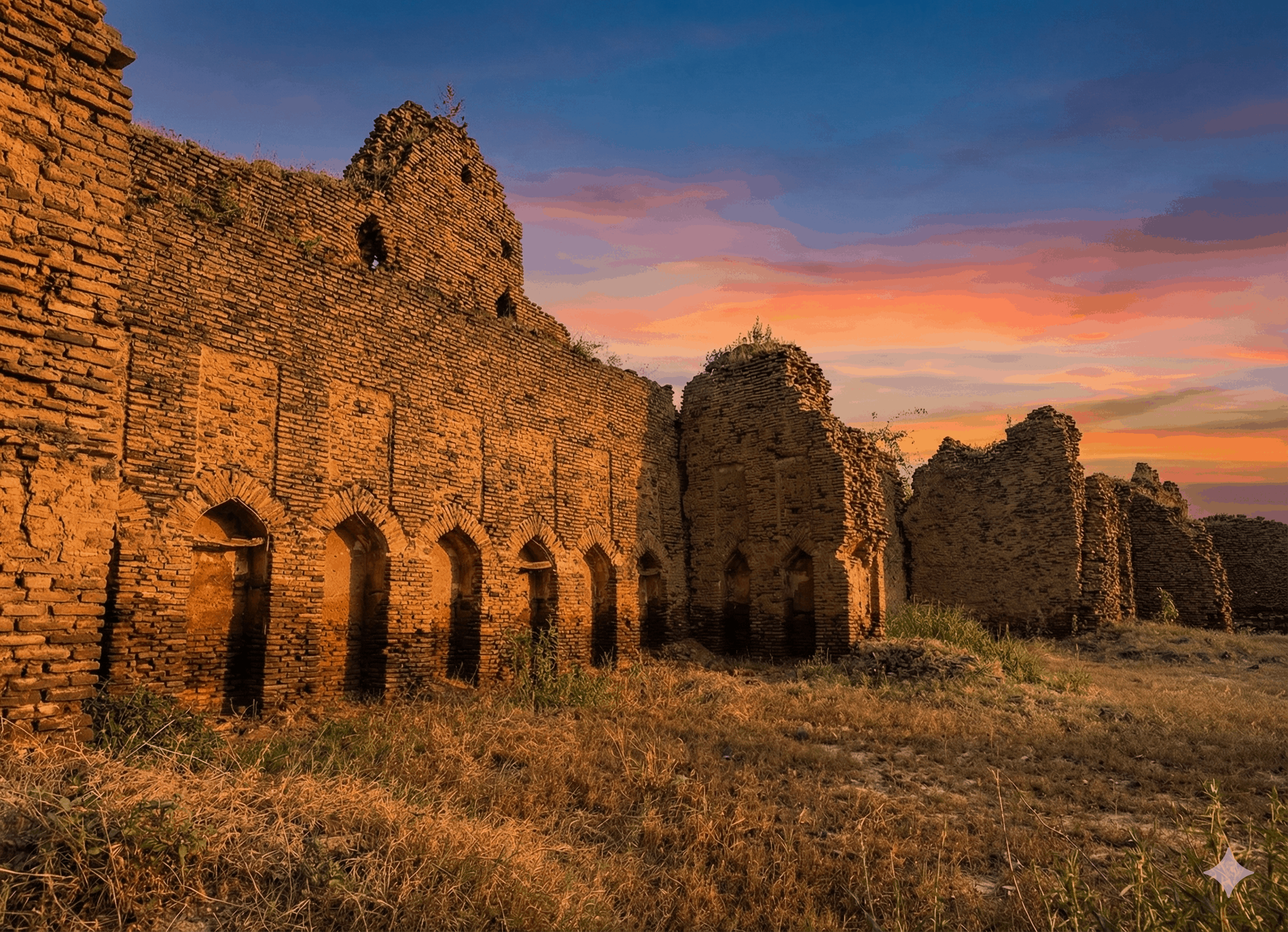
The castle was constructed from volcanic stones and burnt bricks while its foundations are made of solid volcanic rock. Local timber was used to support the roofs, which have entirely collapsed, and it is widely believed that the castle consisted of two stories. |
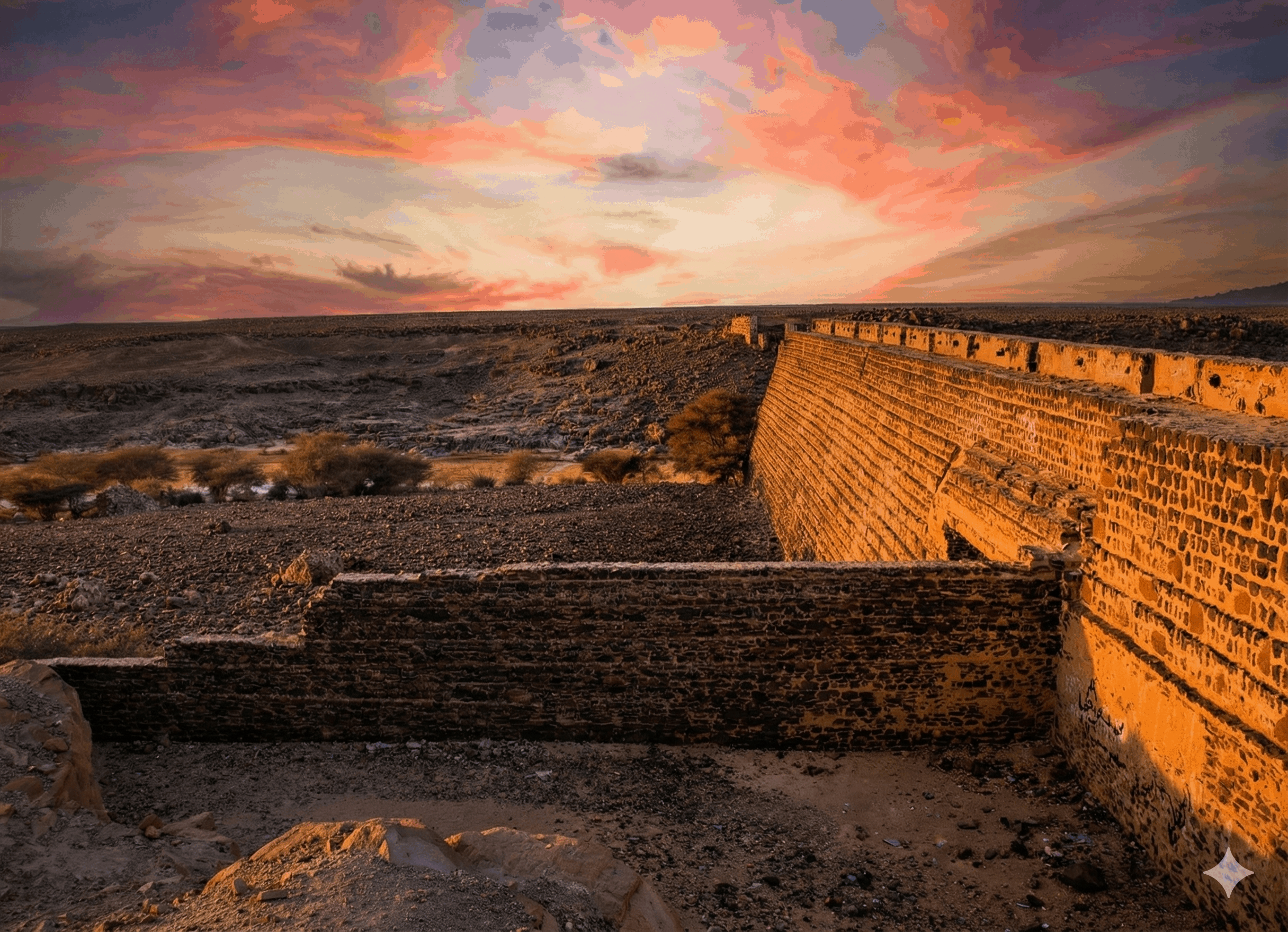
Today, the castle is in ruins, especially on the interior; only remains of some rooms, outer walls, and some internal walls are still visible. Nevertheless, these remains still bear the character of solidity and strong construction, as a nearly intact tower exists in its northern corner, and a modern house has been built on its western side. |
As for the main entrance of the castle, it is located on the southwestern side, leading to a roofed chamber which has another small door to its south leading outside the castle. Both doors are now blocked, and each is topped by a pointed arch. Despite the simplicity of the architectural decorations in the castle, the remaining geometric shapes lend it a character that reflects the spirit of its ancient architecture. |