27.6°
Marid Palace
Qassim
A Lofty Fortress on the Iraqi Pilgrimage Route
Qassim
Marid Palace is located on a high rocky hill east of Ain Ibn Fuhaid in Al-Asyah, at a distance of two kilometres from this site known historically as Al-Nibaj. It is considered one of the largest stations on the Iraqi pilgrimage route and the first station in the Al-Qassim Region. |
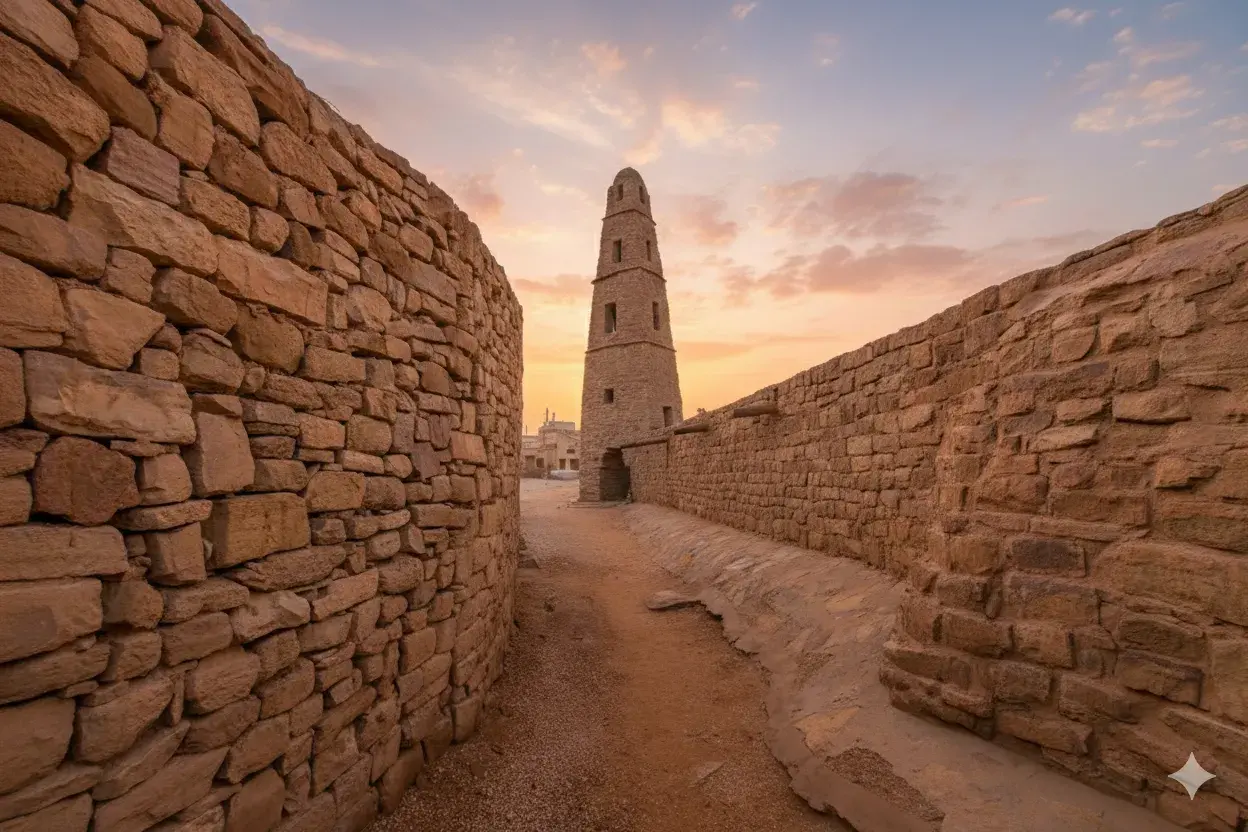
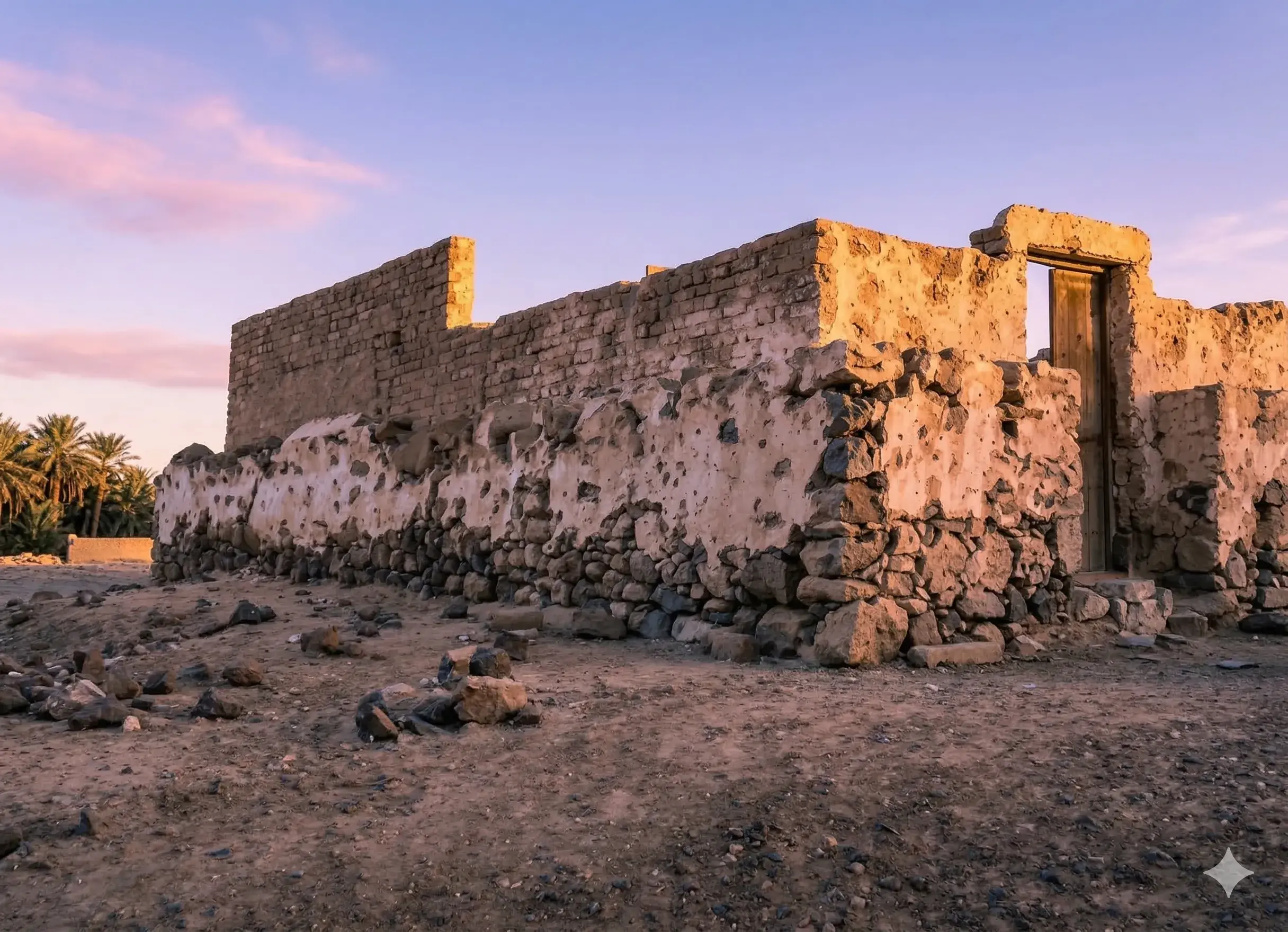
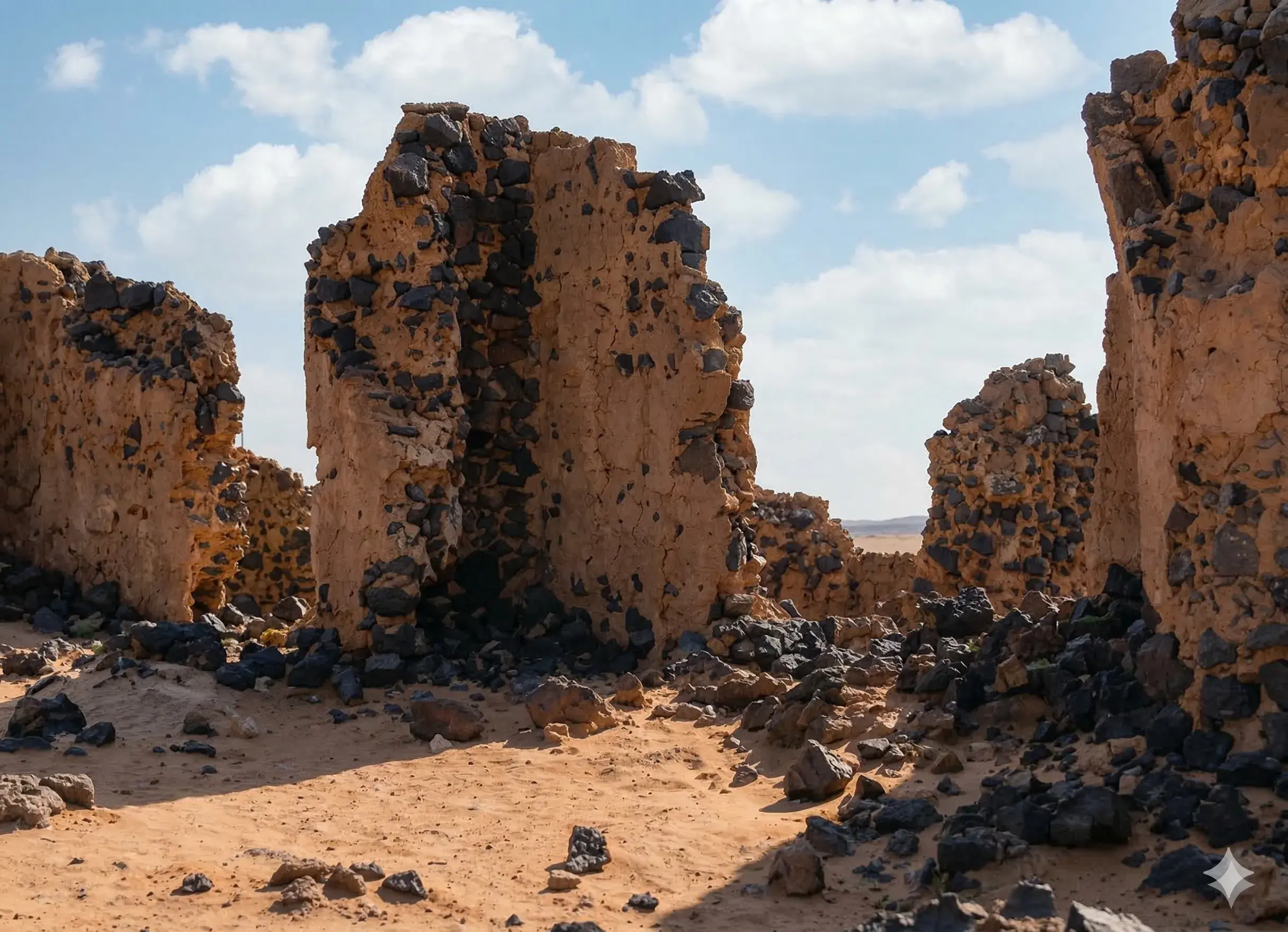
Marid Palace was constructed on a square plan measuring approximately 40 meters on each side. It has a main gate on its western side overlooking the city of Ain Ibn Fuhaid. Its construction highlights a striking blend of might and function, as its outer wall was built with solid black stones, while its upper parts were reinforced with burned bricks, and gypsum was used to bind the stone courses of the palace. |
The towers buttressing the palace walls define its overall form and impart to it the appearance of a historic fortress. As for the internal area of the palace, it is divided into two main sections. The first is a large central courtyard used for carrying out internal activities and functions, as well as for passage. It provides the palace units and facilities with light and ventilation. The other section consists of the palace units and its architectural elements. |
Through the remaining parts of Marid Palace, a visitor can see clearly its architectural details, as rooms and corridors become clear, along with several architectural elements of a functional or aesthetic nature. Examples include unit entrances, windows, and defensive openings. |
Regarding the history of the palace, some believe it dates back to the tenth century AH / sixteenth century AD, based on architectural comparisons that reveal common features between it and similar buildings in the Arab world. On the other hand, others attribute it to the early Abbasid period. |
Thus, Marid Palace constitutes an architectural landmark that translates the meeting of the defensive dimension with architectural beauty, within a historical context linked to pilgrimage and trade routes. |