28.2°
Ramah Palace
Qassim
Remains of a Massive Structure in Al-Qassim
Qassim
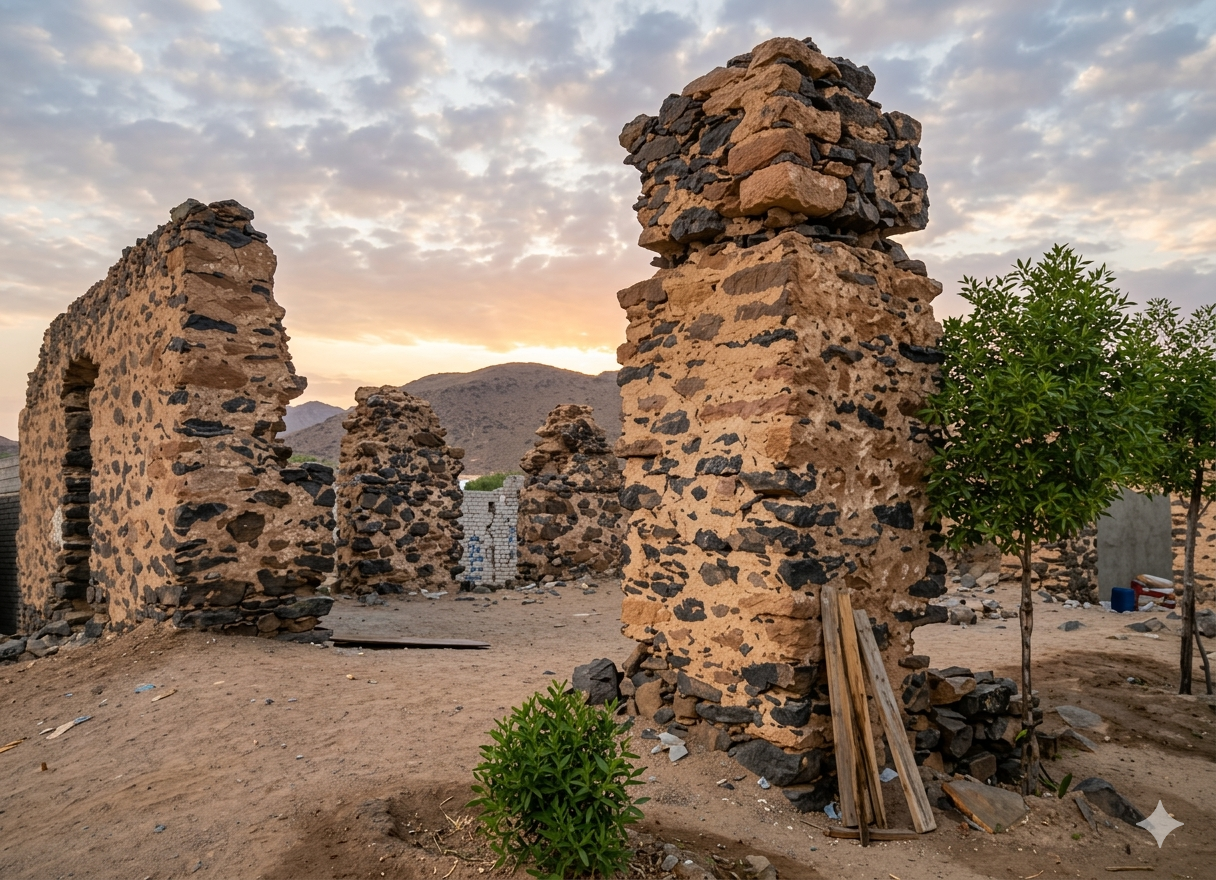
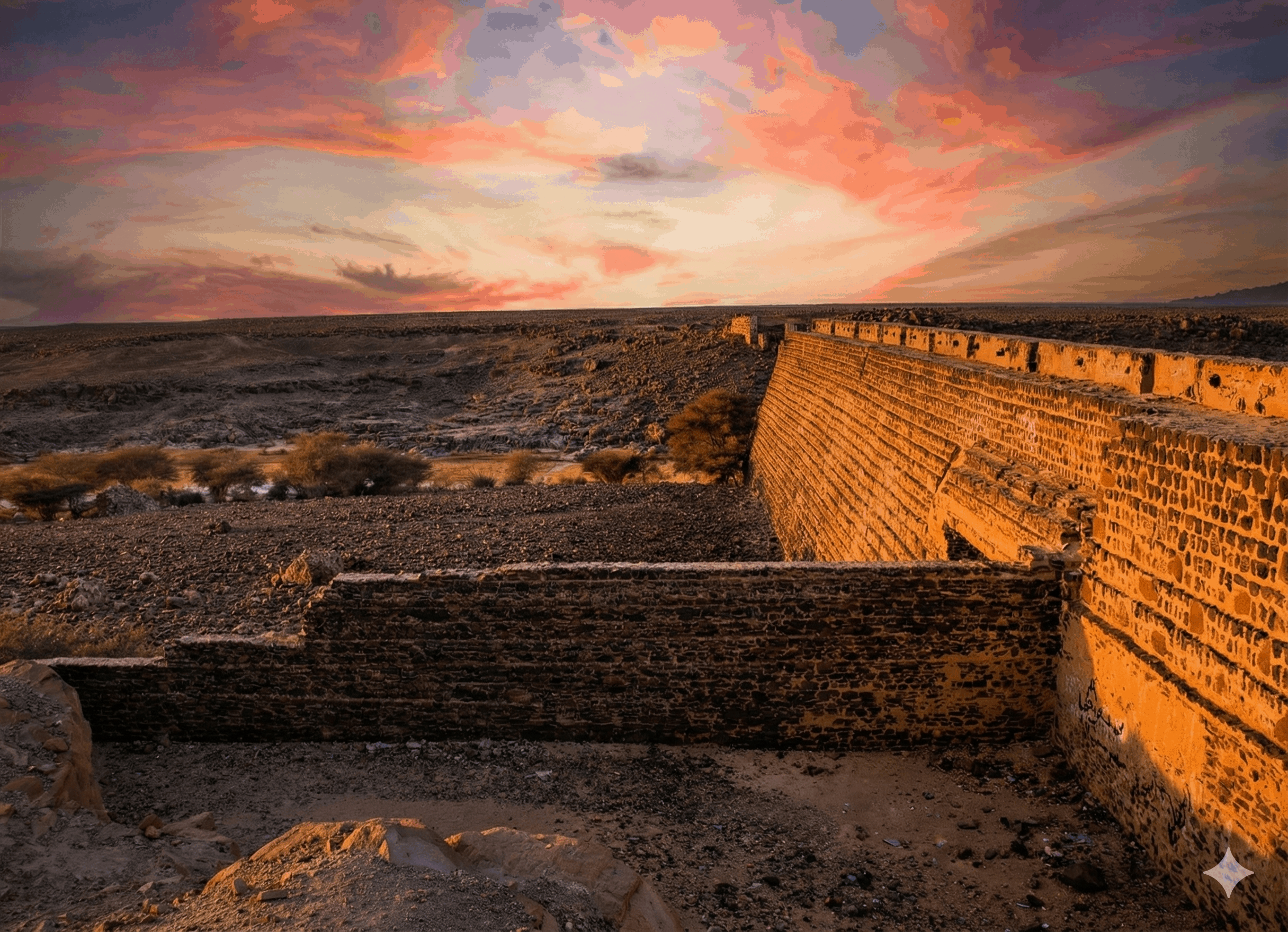
The Ramah archaeological site in the Al-Qassim Region contains several archaeological remains and architectural structures. Of which, the most notably the large and well-defined is the palace, whose stone foundations still unlock most of its architectural details.
Ramah Palace was built from medium-sized stones brought from the rocky highlands near the site, one atop another in an irregular, non-uniform arrangement; therefore, small stones and gypsum were used to secure and bind the stone courses together.
The area of the palace appears very large compared to the surrounding structures, as its outer wall is rectangular with a thickness of one meter, surrounded externally by twelve towers, thereby endowing the palace’s appearance with both defensive and aesthetic qualities simultaneously.
As for the internal layout of the palace, it consists of three main units overlooking an open central courtyard. These units are distributed across the internal facades: the northern contains five rooms, the southern contains six rooms, and the eastern contains seven rooms. Movement and connection corridors appear between the rooms of these units, as well as column bases and the remains of the staircase leading to the palace roof.
The remains of this ancient edifice remain a witness to the investment of local environmental tools in construction and the skill of organizing internal spaces, reflecting many aspects of ancient architectural arts.