30°
Uruq Subay
Riyadh
The Sand Chains That Preserved the Names of History
Riyadh
Located within the Upper Najd Plateau, Uruq Subay stretches over a vast area of flat land with few topographical features. It was previously known as Raml Abdullah ibn Kilab. This name was mentioned in several historical sources. Historians have confirmed that this description accurately applies to the region.
Historical accounts indicate that ancient pilgrimage routes passed through this region. Al-Hamdani mentioned that the route passed through the Manakhar plateau and Dukhul, then entered Raml Abdullah ibn Kilab. These landmarks are still known today, confirming the accuracy of the geographical descriptions in ancient sources.
Uruq Subay extends approximately 176 kilometers from north to south. Its width ranges between 30 and 55 kilometers, covering an area estimated at 5,442 km². It lies between 21°16' E and 22°53' N, near Ranyah Governorate. Tributaries from the wadis of Subay, Ranyah, and Bisha reach this area. These tributaries carried sediments that contributed to the formation of this large sandy expanse.
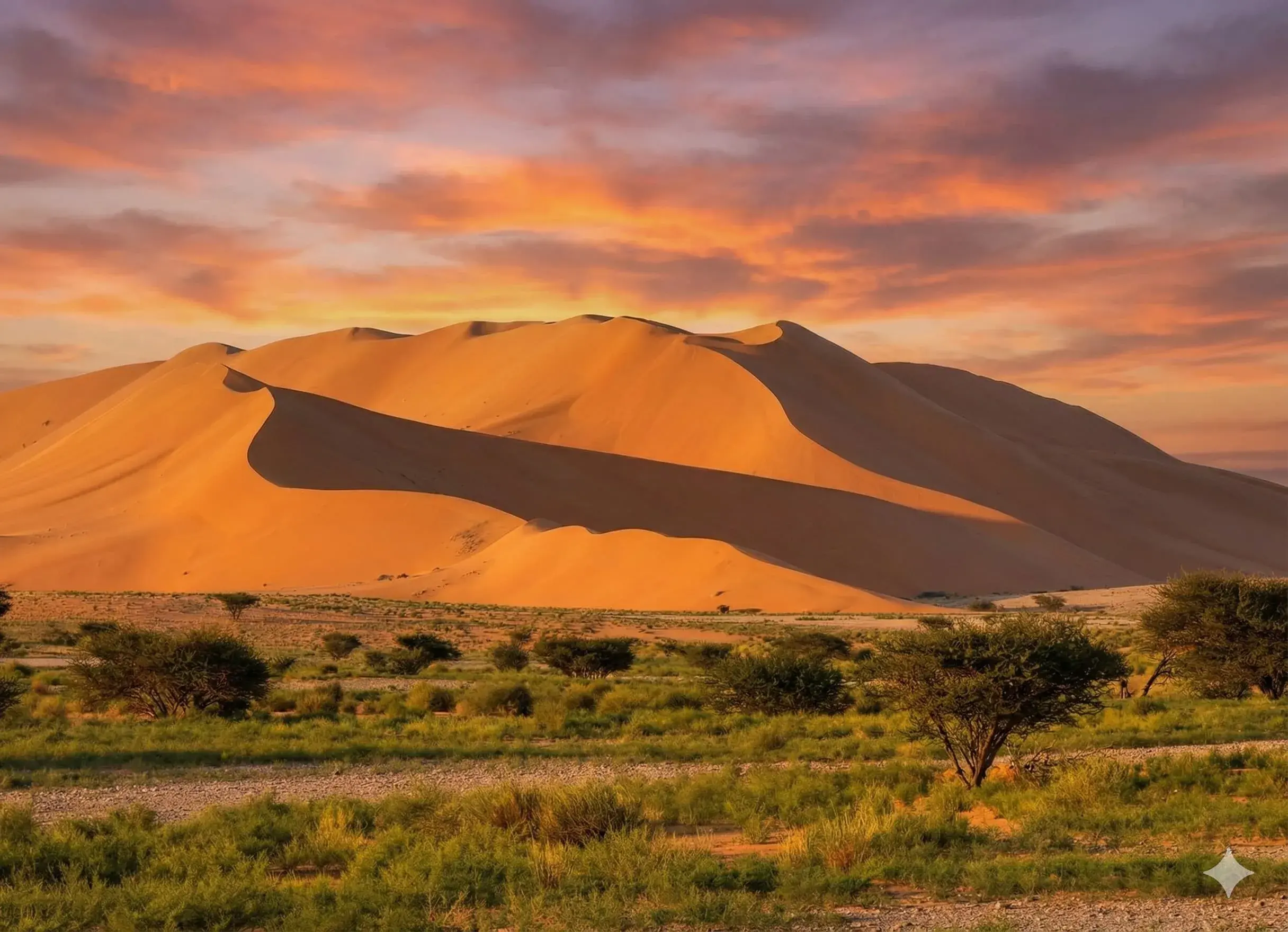
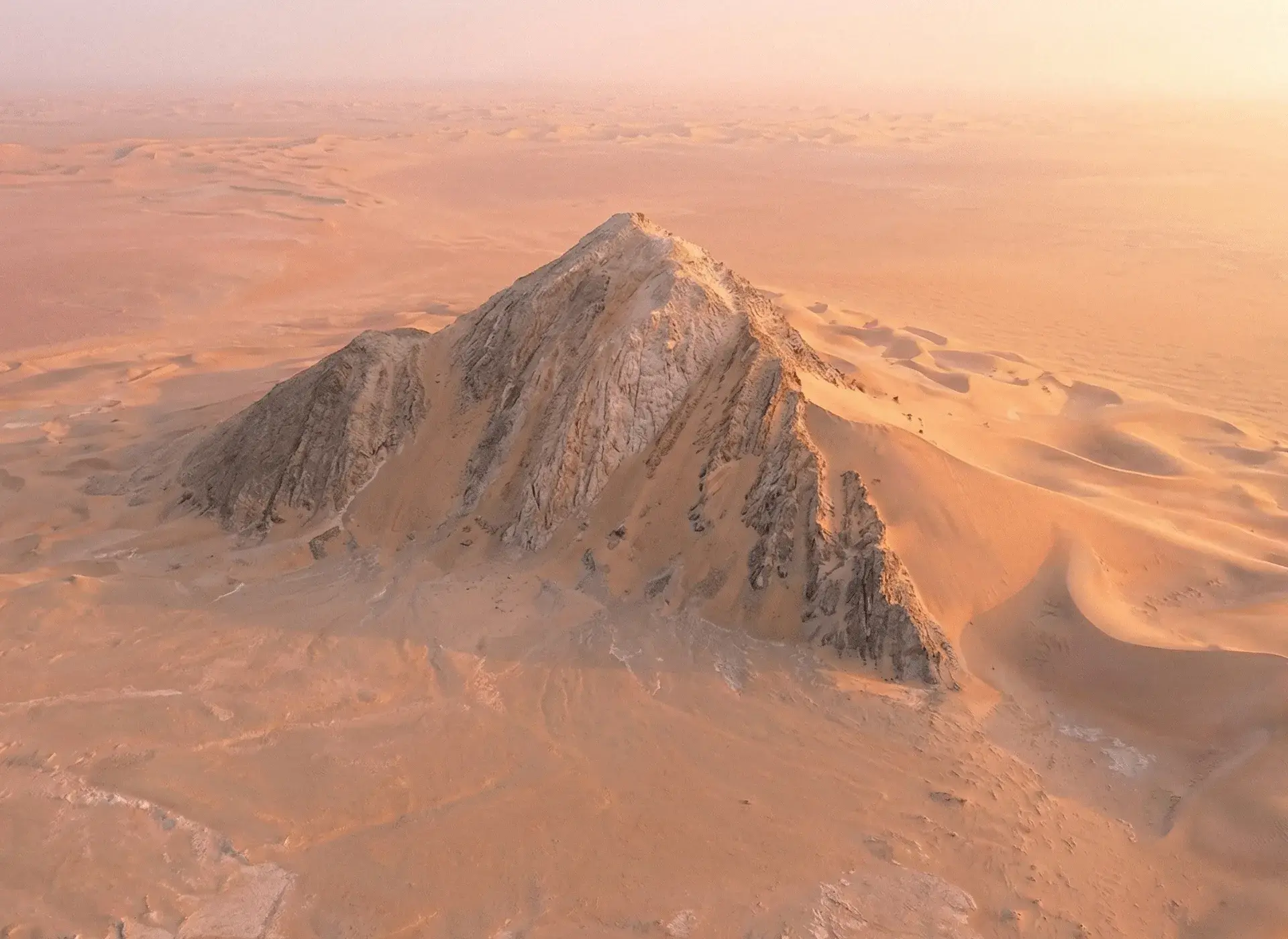
The southern half of the Uruq is characterized by parallel sand chains running from the northeast to the southwest. Examples include Irq Umm Arta, Irq Al-Umayya, Irq Umm Al-Marahi, Irq Umm Al-Shinnan, Irq Al-Thumam, Irq Al-Duwayra, and Irq Al-Khulayj.
The northern half features longitudinal, crescentic, and star dunes. These formations are interspersed with wide depressions (Khubab), such as Khabbat Samhah and Khabbat Umm Al-Khafasi. These geological formations are prime examples of the evolution of sand regions in the Arabian Peninsula.